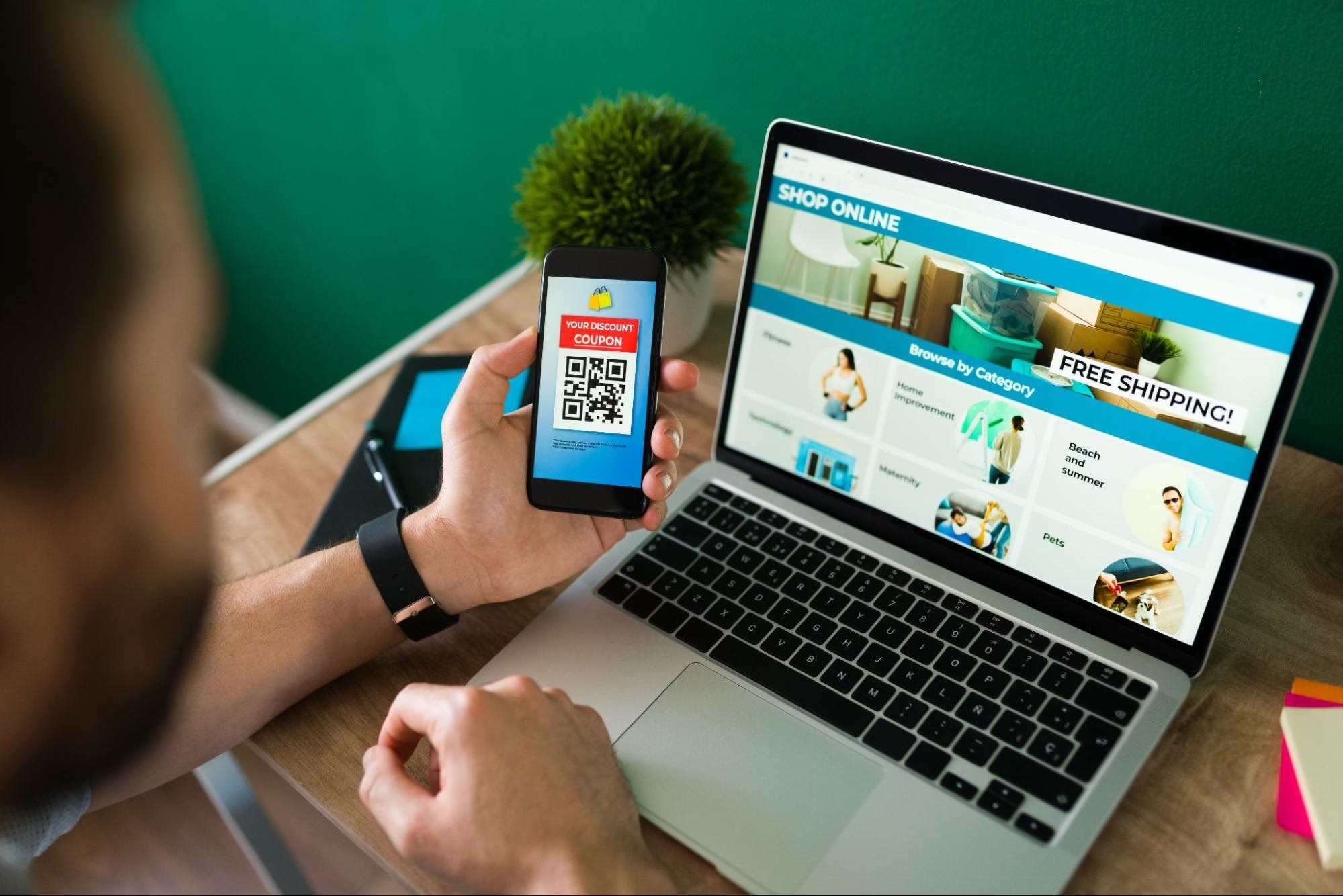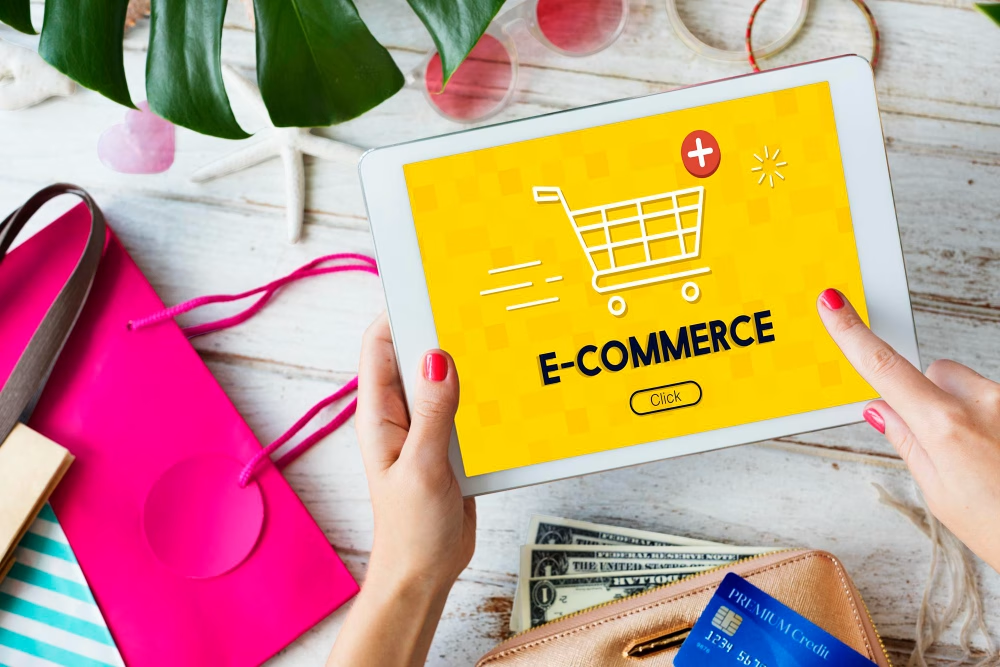
In the current digital economy, knowledge of what e-commerce entails has become a necessity to all businesses, whether they’re large or small.
Whether you are a startup owner and venturing in online selling or an established brand understanding digital transformation, e-commerce is no longer optional; it is the core modern-day buying behavior.
So, what is e-commerce? Electronic commerce, also known as e-commerce, is the purchase and sale of goods or services over the internet.
This is only a mere definition. In the past 10 years, e-commerce has become a giant international phenomenon, redefining the way people shop, the way brands act and the development of digital markets.
Studies in the industry indicate that e-commerce sales exceeded $6 trillion in 2024, and this figure is expected to grow as more individuals adopt online shopping as a convenient, fast, and comprehensive way to shop.
E-Commerce Definition (In Simple and Easy Terms)
The most straightforward e-commerce definition is: Any commercial transaction that happens online.
This involves all of it: purchasing clothes using a website, subscribing to a streaming service or consulting online, as well as ordering food via an app or selling online products such as ebooks and templates.
It is an elastic, customizable and customer-led system that lets companies reach their customers in any part of the globe without having to be restricted by a physical store.
How E-Commerce Works

Essentially, an e-commerce model is based on a web-based storefront, the payment method, safe transactions and a smooth delivery system. However, personalization, data-driven marketing, SEO, automation and multi-channel sales strategies are also part of modern e-commerce.
A basic e-commerce transaction typically includes the following:
- A customer exploring an online product.
- Viewing product details on digital platforms.
- Adding the product to a cart
- Checking out using an online payment method.
- Getting the product in the form of a digital transfer or shipping.
Each of the steps in this process may be optimized for speed, trust, or conversions.
Types of E-Commerce

If you want to be clear about where your brand fits and how you can scale, knowing about the main types of e-commerce will greatly help. Although e-commerce has many models, the following four remain most prevalent:
1. B2C (Business to Consumer)
B2C by far is the most popular e-commerce business model. It consists of brands that offer products or services to final consumers in their online shops. Among those are Nike.com, Amazon, and Sephora.
2. B2B (Business to Business)
In this model, companies sell goods or services to other companies. These are wholesale providers, software vendors, logistics partners, and sites like HubSpot or Alibaba.
3. C2C (Consumer to Consumer)
People sell on platforms to other people via online marketplaces – think eBay, Etsy or Facebook Marketplace.
4. D2C (Direct to Consumer)
Brands circumvent third-party merchants and sell directly on their website. This model has developed quickly along with the development of social commerce and influencer-based brands.
These types frequently overlap, and numerous brands are engaged in more than one of these divisions due to their objectives and products.
Top, Successful Real-Life E-Commerce Examples
The following are some of the common examples of e-commerce that are used in everyday life:
- Directly making an order on the Apple website.
- Online booking of flights or hotels.
- Buying online courses or digital templates.
- Ordering food with the help of apps such as Uber Eats or DoorDash.
- Subscribing to Netflix, Spotify, or cloud services.
- Shopping through the stores of Walmart, Amazon, or Shopify.
These examples show the versatility of e-commerce across industries – retail, entertainment, education, food, technology, and more.
Benefits of E-Commerce for Modern Businesses

Businesses are shifting to online selling faster than ever because e-commerce offers advantages that physical stores simply can’t match.
1. Unlimited Reach
With e-commerce, your business is no longer tied to a city or region. You can serve customers across the country or even globally, without opening multiple storefronts.
2. Lower Operating Costs
No rent. No utilities. Fewer staff. A well-built online store reduces overhead expenses, allowing businesses to invest more in marketing and product development.
3. 24/7 Availability
Your store never closes. Customers shop whenever they want, increasing overall sales potential. Consumers love the freedom and flexibility that e-commerce provides.
4. Data-Driven Growth
Every click, purchase, and user action provides insights. This data helps businesses improve products, optimize marketing campaigns, and deliver a personalized experience.
5. Faster Purchasing Process
Online shoppers can compare prices, look at reviews, explore options, and check out within minutes. Convenience is the #1 reason 70%+ of consumers prefer online shopping.
6. More Marketing Opportunities
SEO, social media ads, email campaigns, and retargeting unlock powerful ways to reach customers who are actively searching for solutions.
7. Scalability Without Limits
Whether you’re selling 10 products or 10,000, e-commerce platforms like Shopify, WooCommerce, and BigCommerce offer flexible tools to support growth without heavy operational strain.
Why E-Commerce Matters More than Ever
Consumer expectations have shifted dramatically. People now want instant answers, quick ordering, easy tracking, and frictionless customer support. A business that isn’t online misses out on massive opportunities.
More importantly, customers associate digital presence with credibility. If a brand doesn’t have a website or an online purchasing option, buyers often choose competitors that do. E-commerce is now a sign of trust, professionalism, and standardization.
Businesses that invest in strong e-commerce systems are also more resilient. They can survive economic fluctuations, expand to new regions, and adapt to new buying behaviors faster than traditional businesses.
The Future of E-Commerce
The next decade will push e-commerce even further with:
- AI-driven personalization
- Voice shopping
- Augmented reality try-ons
- Automated customer service
- Subscription-based models
- Social commerce and creator-led buying
- Same-day, automated, or drone delivery
Brands that adapt early will dominate online markets and those who delay risk losing visibility in a fast-moving digital world.
Key Takeaway: E-Commerce is No Longer Optional

Any business that wants to stay relevant in today’s digital times must build a strong presence online. But a successful e-commerce business isn’t just about launching a website.
It demands strategy, optimization, traffic generation, customer experience design, and consistent growth based on real-time data. And that’s where expert marketing guidance becomes invaluable.
E-commerce giants like Amazon, Alibaba, and eBay have transformed the working of the retail industry – forcing traditional retailers to change traditional business practices.
The modern boom in e-commerce has also created new opportunities for new, small companies to find their niche. Newcomers have a lot to explore and achieve as they bring innovative ideas to the global market.
This business model has much more potential for growth, this makes it an ideal first business model for aspiring entrepreneurs.
Do strong market research and start with a small, narrow focus when starting your e-commerce venture. This will give you enough room to focus and grow.
Build a High-Performing E-Commerce System
Take your business online the smart way with experts. Straight4Ward Consulting & Marketing helps companies to build scalable, high-converting, fully optimized online stores that generate real revenue.
We can help you with content strategy, website development, search engine rankings, or full-funnel marketing. We aim to take your business toward measurable growth. Book a consultation today, discuss the details with us, and scale with confidence.