In today’s times, brands are in constant competition to gain customer attention online. Your website is your storefront and becomes the first handshake with your customers.
You must understand this fundamental question before you plan out your design, layouts, or fancy features: What is a static website and is it good for your business?
Static websites empower the web pages you use on a daily basis. These can be landing pages, portfolios, or online documents.
Although static websites may appear simple, they are backed by a powerful approach. These are actually pre-built HTML pages that are delivered exactly as stored – no server-side processing involved.
You might be a small-business owner, entrepreneur, coach, or local service provider who is trying to make confident digital decisions. Whatever the case may be, knowing and understanding the difference between static and dynamic websites is integral.
This guide breaks it all down in simple words to help you know exactly what to choose and why. Let’s dive right in.
Static Website Meaning (in Simple Terms)
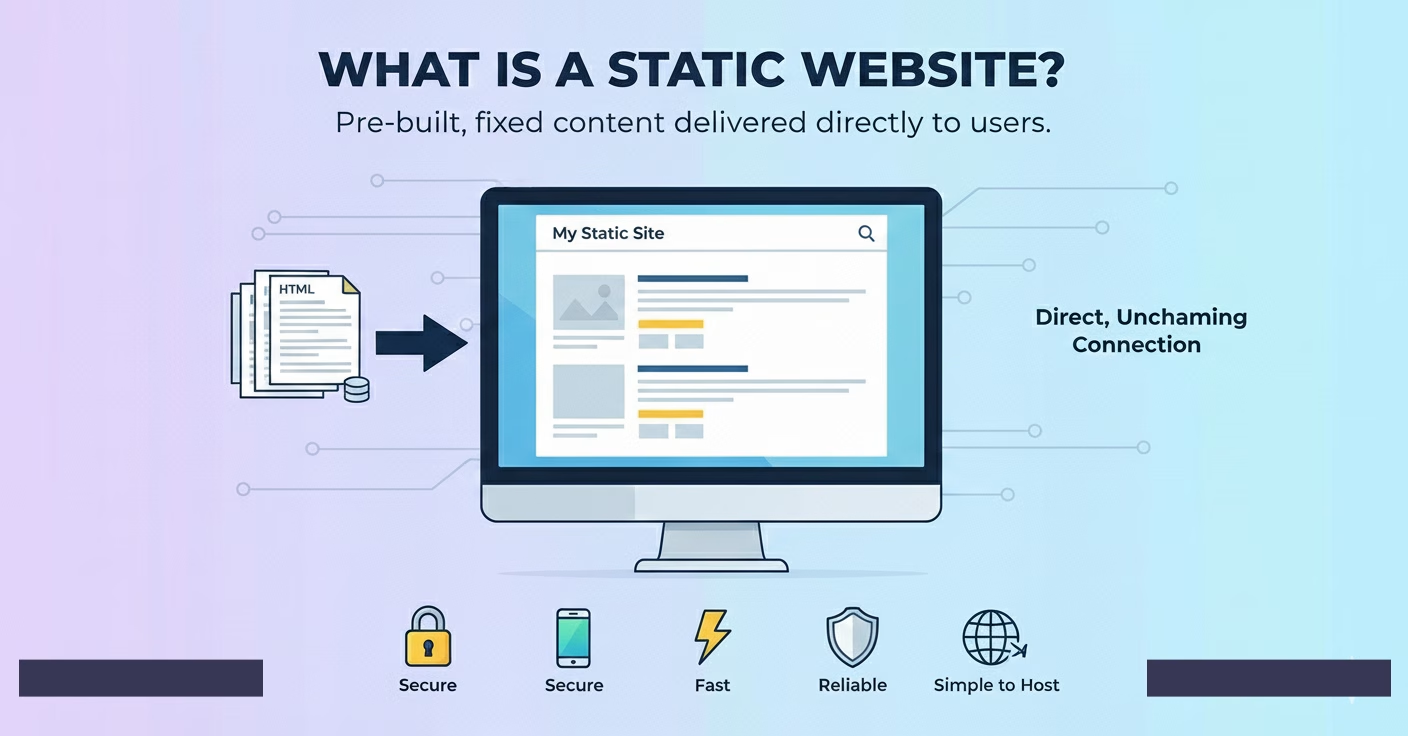
A static website may be defined as: “A website with fixed content that doesn’t change unless it’s manually updated.”
So, this means it’s made of fixed pages. Each page is pre-built and stays the same until a developer manually updates it. No changes occur due to user behaviour; every visitor sees the duplicate content every time they visit.
The concept is simple. You can think of it like a digital browser. Once designed and published, it stays exactly as it is unless someone edits the code or replaces the content.
What is a Static Web Page?
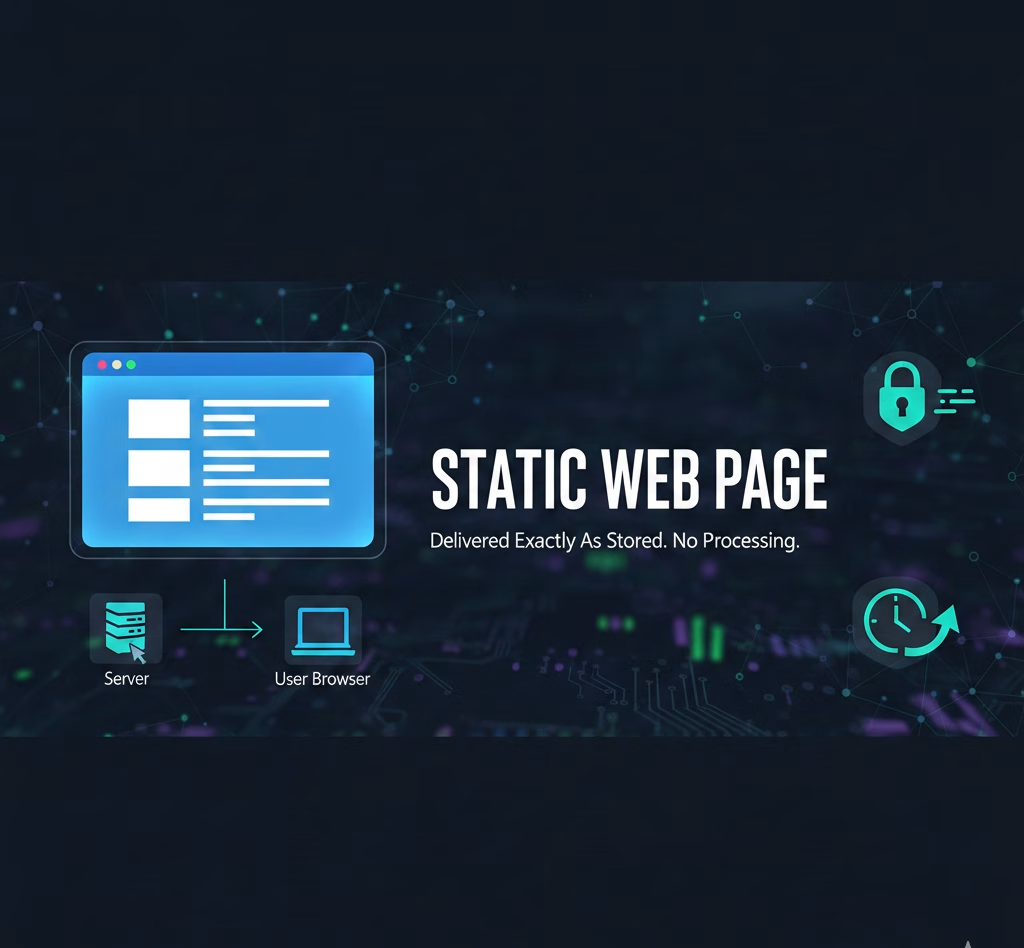
A static web page is a single page of a static website. It’s coded in HTML, styled with CSS, and sometimes enhanced with basic JavaScript. But the core point remains: It doesn’t pull data from a database, doesn’t generate new content automatically, and doesn’t change based on who visits.
Everything stays stable, predictable, and simple. For example, it can be a “Home” page with fixed text or an “About Us”, “Service”, or a “Contact Us” page with a form where form submissions can be emailed, but the page content stays the same.
How a Static Website Works (Behind the Scenes)
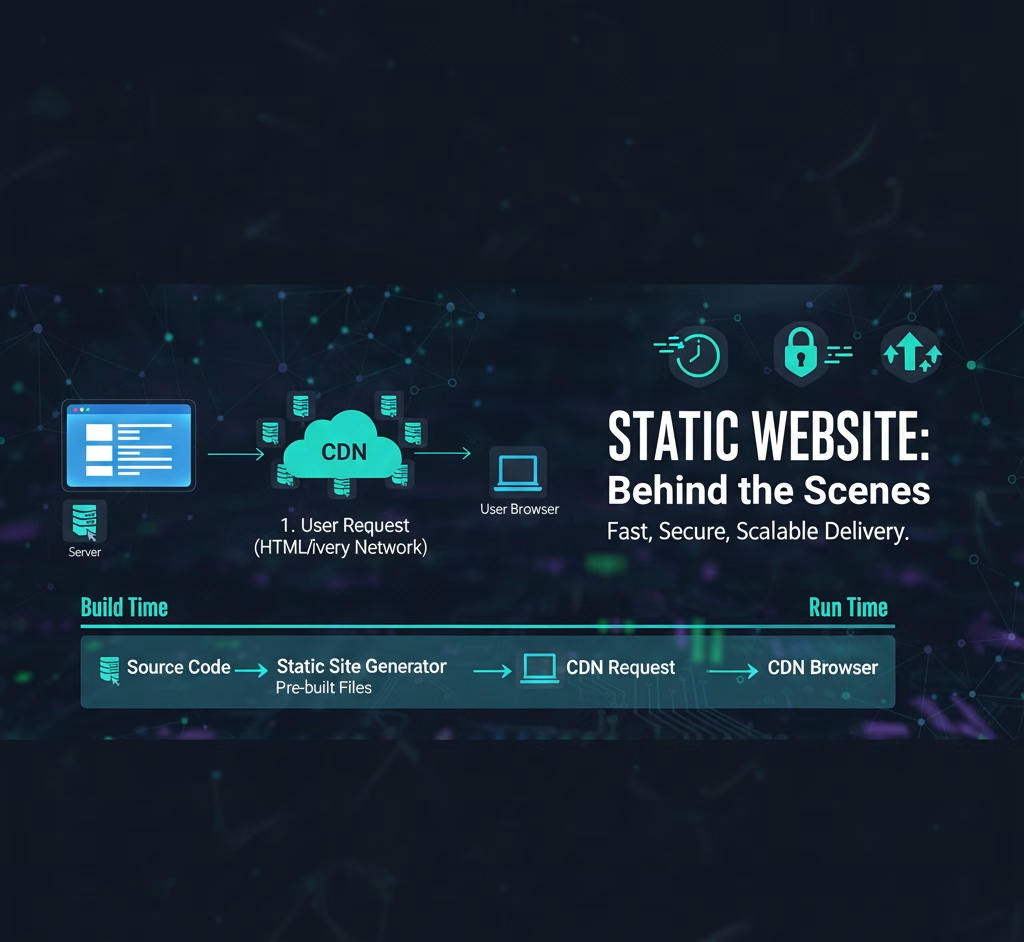
Static websites are built using basic languages like:
- HTML for structure
- CSS for design
- JavaScript for effects or simple interactions
There are no databases, no complex programming layers, and no moving parts. When someone clicks your URL, the server sends the exact same page every time – fast, clean, and secure.
This simplicity is what makes static sites extremely reliable.
Why Do Static Websites Still Matter Today?
With all the advanced website platforms available today, you might wonder: Why are people still choosing static websites?
Because simplicity has power.
Many small businesses don’t need complicated booking systems, dashboards, or data-driven pages. They need an appealing website, fast loading speed, easy maintenance, and clear information for customers.
Static sites deliver all of that and more.
Benefits of a Static Website (Why Many Small Businesses Prefer Having it)

1. Blazing Fast Loading Speed
As there are no databases or heavy processing involved, static websites load much faster. Fast sites lead to:
- Better user experience
- Higher conversions
- Improved search rankings
In short, speed = revenue.
2. High Security
There are no databases and plugins in the operation of static websites, which means:
- Fewer vulnerabilities
- Lower risk of hacking
- No need for updating software.
This is what makes them the best fit to businesses that are interested in a worry-free site.
3. Cost-Effective to Build and Maintain
The development time, number of tools and maintenance of static sites are less and hence it is cost-effective to start ups and small enterprises.
You save money from:
- No plugin licenses
- No monthly software updates
- Less ongoing maintenance
4. Perfect for Small Websites
A simple site can be a wiser decision when you require between 3-7 well-designed and powerful pages to showcase your brand.
Ideal pages include Home, About, Products, Services, Testimonials, FAQs, Contact – no complexity. Just clarity.
5. SEO-Friendly Foundation
Search engines love websites that load fast, have clean code, and show clear content. Static websites naturally check all three boxes.
With tactical copy, locating keywords and an excellent content plan, your site will be an effective lead-generation tool for your venture.
6. Easy to Host Anywhere
There is no need of having heavy servers in case of static websites. You can host them on:
- Simple hosting plans
- Cloud platforms
- Affordable shared hosting
This ensures that long term costs are kept low and performance is good at the same time.
Who Should Choose a Static Website?
A static website is ideal for businesses that need clear information and a strong online presence without constant updates or backend complexity.
Choose a static website if you are:
- A consultant, coach, or service provider
- A local business (salon, gym, clinic, real estate agent, small shop)
- A freelancer or creative professional
- A startup trying to establish digital credibility
- A brand that just needs clean pages and strong messaging
If your website is meant to inform, convert, and present your brand professionally, static is often the perfect fit.
When You Should Not Choose A Static Website
Honestly speaking, static websites are not always the right choice for businesses. The decision depends. Here’s when a static website is not the best choice for you:
- If you need user accounts or login systems
- You want to have online stores with product management
- You require frequent content updates or blog posts.
- If you have to establish book systems with dynamic availability
- Have dashboards or data-driven pages
These require dynamic website technology, CMS platforms, or advanced development. Static sites win when your goal is clarity, simplicity, and speed, not automation or interactivity.
Examples of Businesses that Thrive with Static Websites
Here are real-world use cases where static websites perform beautifully:
- Consultants and marketing agencies
- Interior designers
- Construction, contracting, or handyman services
- Personal trainers or wellness coaches
- Law firms and private clinics
- Real estate agents showcasing services
- Beauty salons and aesthetic services
All they need is a clean, professional presence with strong branding – no heavy backend systems.
Static Website vs. Dynamic Website (Quick Comparison)
| Feature | Static Website | Dynamic Website |
| Content | Fixed | Changes automatically |
| Speed | Extremely fast | Depends on database load |
| Cost | Low | Higher |
| Security | Very secure | More vulnerable |
| Maintenance | Minimal | Ongoing |
| Best for | Small businesses, portfolios, service pages | E-commerce, booking, memberships |
Why Small Businesses Love Static Websites (The Straight4Ward Perspective)
At Straight4Ward Consulting & Marketing, your clients don’t just need a website they need a website that works for them. And most small-to-mid-sized businesses don’t need heavy tech. They need clarity, storytelling, strength in messaging, and fast-loading pages that convert.
That’s exactly where static websites shine.
They help you:
- Establish instant trust
- Deliver a clean, modern brand presence
- Keep maintenance low and efficiency high
- Load quickly across all devices
- Create a smooth first impression that matches your business values
Static websites give you the strongest possible foundation for long-term digital credibility.
Key Takeaway

If you own a business, then understanding what a static website is and what it does for your venture helps you make confident, informed decisions about your digital presence. With the surge of transformative strategies, modern businesses continue to flourish – some of which are speed-first, mobile-first, and secure-first.
Static websites have now become a powerful choice for ventures that prefer clarity without complications. Your brand launch, rebuild of your online identity, or continued operations need a static website to move with confidence and professionalism.
Struggling to get a responsive website? Let seasoned professionals do the job for you.