
Marketing is a broad term that covers paid and organic outreach to acquire brand awareness. You might have noticed that some websites pop up on Google instantly while others have to climb the ranks slowly.
And if you’re trying to grow a business online, then you’ll get familiar with two common terms – SEO and SEM.
SEO and SEM are both important parts of digital marketing. Both strategies focus on optimizing your website and getting it in front of the right users on search engine results pages (SERPs). The intention remains to get your brand found online.
Below is a clear breakdown of the difference between SEO and SEM so you can use each effectively.
What Is SEO?
SEO is Search Engine Optimization. It’s the act of improving your website so it ranks higher in organic search results. You don’t pay for clicks.
At its core, SEO is about enhancing your site, making it useful, trustworthy, and easy for both users and search engines to understand. SEO revolves around several key factors:
- High-quality copy and content
- On-page optimization
- Technical setup
- Improved site speed and mobile experience
- Backlinks, etc.
That means writing helpful blogs or service pages, fine-tuning titles and meta descriptions, ensuring your site loads fast and works well on mobile, and getting other reputable websites to link to yours.
When SEO is done right, Google and other search engines reward your site with better visibility, steady traffic, and free clicks. But here’s the thing: it takes time.
How long does it take? Most websites need at least three to six months to see significant organic gains. In short, SEO is a long game. It’s about planting trees that grow fruit over time, not instant results.
What Is SEM?
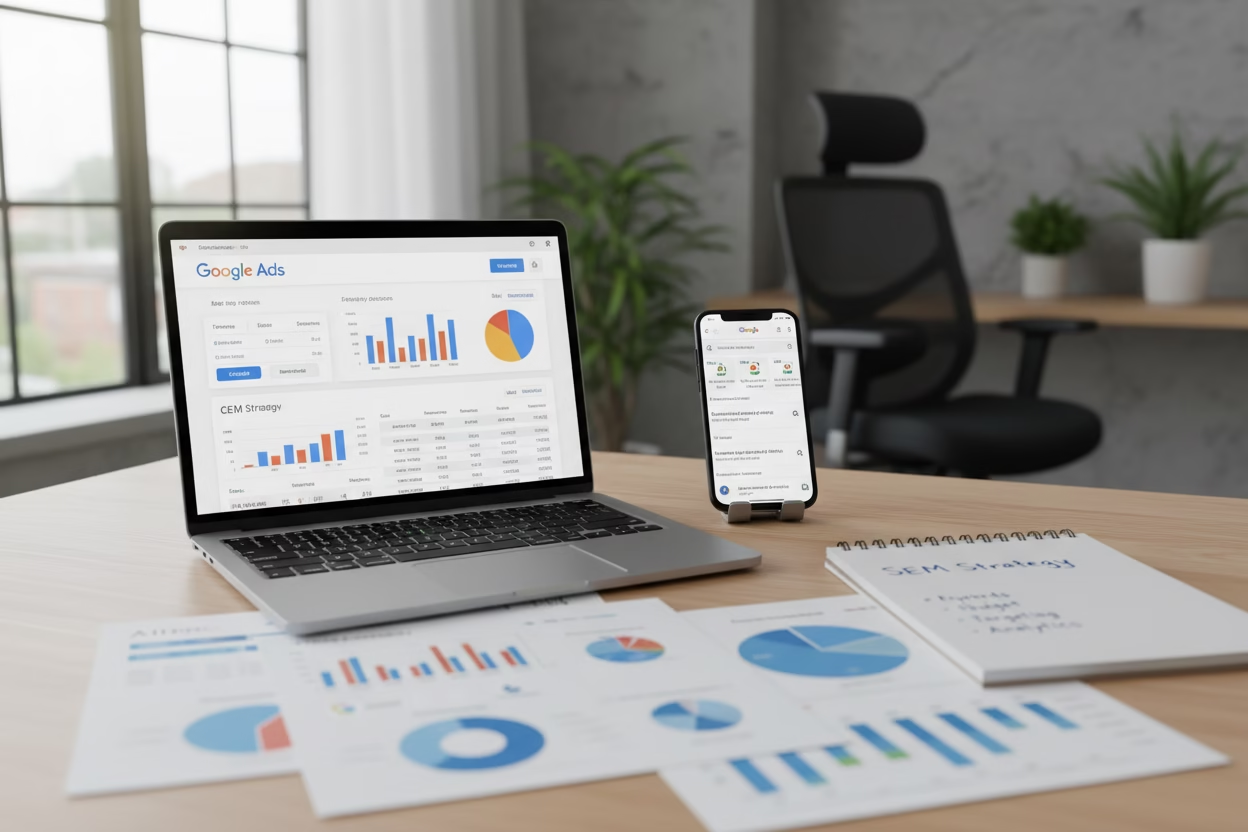
SEM, or Search Engine Marketing, focuses on paid search advertising, including pay-per-click (PPC) campaigns. You’ve probably seen this as ads labeled “Sponsored” at the top of Google search results.
SEM includes pay-per-click (PPC) campaigns, where you pay each time someone clicks your ad.
With SEM, you can:
- Show up instantly in search results
- Set daily or campaign budgets
- Target specific keywords, demographics, and audiences
- Drive traffic as soon as your ads go live
- Measure clicks, conversions, and ROI in real-time
SEM gives you instant visibility. But it stops the moment you stop paying. Unlike SEO, you’re not earning free clicks; you’re paying for each one.
SEM also covers contextual ads, AdSense, social network ads, and more, giving you multiple ways to reach your audience quickly.
SEO vs SEM: Key Differences
Understanding the differences between SEO and SEM side by side helps you see which strategy suits your business best:
| Factor | SEO | SEM |
| Cost | Investment in content and tools; no direct cost per click | You pay for clicks and impressions |
| Time to Results | Slow build; months to rank | Immediate (as soon as ads run) |
| Longevity | Long-term; traffic continues over time | Short-term; stops when budget ends |
| Approach | Organic optimization | Paid search + possibly SEO |
| Conversion Rate | Higher on average because users trust organic results | Lower average conversion but targets high-intent audiences |
| Control | Less control over exact timing | Full control over spend, placement, and targeting |
Investment
SEO doesn’t charge per click, but it demands consistent effort. You’ll need quality content, proper tools, and possibly agency support. SEM, on the other hand, requires direct ad spend, which can add up quickly depending on your industry and campaign goals.
SEM can be pricier upfront, but it drives traffic fast. SEO is cheaper in the long run, but it’s more about steady, ongoing growth.
Time to Results
Here’s where the two strategies really diverge. SEO requires patience. You might see improved rankings in 3–6 months, sometimes longer in competitive niches. SEM delivers results almost immediately. Your ads can start bringing traffic within hours or days of launch.
SEM is the better choice for fast awareness, quick sales, product launches, or time-sensitive promotions. If you’re aiming for long-term brand visibility, SEO is the better investment.
Longevity
When your site secures top organic placement, it could maintain it through constant search engine optimization. That traffic doesn’t disappear overnight. SEM essentially rents visibility – it lasts only as long as your budget does.
SEO creates a base for businesses that consider expanding in the long-term. SEM is ideal in cases of short-term campaigns or quick testing.
Conversion Rate
Research indicates that organic search can convert better than paid advertisements. One benchmark found that SEO has an average conversion rate of around 2.4%, while SEM sits at about 1.3%.
Organic results also receive roughly 19 times more clicks than paid ads on Google. This suggests users tend to trust organic results more – especially when researching or comparing options.
What’s Right for You?
What’s right for you depends on your goals. Think of SEO as planting fruit trees that keep giving year after year. SEM is like renting a billboard that grabs attention right away.
Both SEO and SEM have huge value, but the best choice depends on your goals. Consider these:
Choose SEO if:
You’re focused on long-term growth and want sustainable organic traffic without paying for every click. Building brand authority matters to you and you are willing to wait for a few months to see results.
Choose SEM if:
You need immediate visibility or traffic or you’re launching a new product, promotion, or service. You want to test keywords or messaging quickly and you need fast data to inform broader marketing decisions.
Pro Tip: Many smart marketers actually use both. SEM drives fast results while SEO builds long-term momentum. SEM campaigns can even help you identify the keywords that convert best before you optimize for SEO.
Did you know?
Organic results get 19x more clicks than paid ads on Google.
Wrapping Up

At the end of the day, SEO and SEM share the same goal: getting your business discovered by the right people online. They just take different paths to get there.
SEO builds trust, authority, and sustainable traffic over time. While SEM delivers quick visibility and precise targeting, but only while you’re paying.
Both have a place in a smart marketing strategy, depending on your goals.
SEO vs SEM: Your Winning Path Forward
SEO plants enduring roots for trust and steady growth, while SEM ignites immediate visibility for urgent wins. The smartest strategies blend both, using paid insights to fuel organic dominance and long-term authority.
Ready for a custom roadmap that maximizes traffic, conversions, and ROI – without guesswork?
Contact Straight4Ward Consulting & Marketing for a tailored plan that aligns perfectly with your goals and timeline.