A web design can either make or break your brand impression within the seconds a visitor spends on it. Visitors decide instantly whether they should stay or abandon the site.
Design attributes to 57% of your website’s credibility. Without practical design, you’ll lose visitors’ trust. Whether you’re building a site from scratch or updating an existing one, avoiding these errors will empower your business to stand out online having earned it the right way.
This post provides you with the eight best insights about top website design or redesign mistakes. I’ll also add actionable ways to fix those errors.
1. Overlooking user accessibility needs
Website accessibility is the set of best practices designers should implement during the web design process. These practices ensure a website is easier and more intuitive to use for people with visual, hearing, motor, or cognitive impairments.
Taking user accessibility merely as an option is a crucial mistake one can make while designing a website. The main accessibility errors are as follows:
- Using insufficient color contrast
- Inadequate or no visual focus indicators
- Missing accessible names or labels
- Overlooking the need for on-screen accessibility keyboard capabilities that can be commanded by voice, head, or eye movements for people with physical disabilities.
- Missing or inappropriate alternative text for images or graphics
Fix: Design for everyone.
Add alt text, use high-contrast colors, clear labels, also ensure keyboard and voice navigation work seamlessly.
2. Neglecting responsive design

Skipping responsive web design is a huge mistake. If your site doesn’t look good on any screen, or multiple screens; including mobile, you’re already left behind.
There’s no point in even thinking about beating a competition.
With the term “responsive design,” I mean different screens, which include:
- Mobile phones (small screens, touch navigation)
- Tablets (medium-sized screens, both portrait and landscape)
- Laptops and desktops (larger screens, multiple resolutions)
- Large displays (wide monitors, TVs, or projectors)
Note that mobile responsiveness often remains the biggest priority. This is because most traffic comes from smartphones. True responsive design ensures a consistent and user-friendly experience across all devices.
If a website lacks easy navigation on any of the screens, visitors get frustrated which increases your bounce rate. As websites are primarily built with the help of desktop browsers, mobile users often get neglected.
Fix: Go fully responsive.
Test your site on mobile devices, tablets, desktops, and large screens to ensure a seamless experience across all devices. Adjust layouts to optimize the user experience.
3. Prioritizing aesthetics over user experience

Many websites overlook compromising user experience for aesthetics. This leads to attractive yet frustrating websites that lack the real spirit of web design.
Aesthetics develop emotional connections, and they matter when they are backed by enhanced usability and are serving the user’s goals. Undoubtedly, aesthetics capture attention and foster deeper trust between the brand and its users; but the significance of core functionalities of a web design cannot be undermined.
Easy navigation, accessibility, and allowing users to complete their tasks efficiently remain a top priority. That being said, excessive use of animation, content, and heavy graphics become useless if the site’s practicality fails to serve with functionality.
Fix: Keep balance.
Maintaining a balance between user experience and design is key. Use visuals to attract, but let usability lead the way – clean navigation and easy tasks win over flashy effects.
4. Avoiding design customization for the brand

Your website is your business storefront on the internet or an online stage. It must reflect your brand voice and company values. Customization is integral when designing a website that helps grow a business online.
Failing to do so can hinder business growth by merely exiting in the online market. Lack of customization results in a generic presence, limited functionality, potential security concerns, and poor user experience. The business finds it harder to attract and retain customers – impacting growth and profitability.
Such a site will struggle to stand out in a competitive market and meet specific business needs. And cookie-cutter templates only make things worse. Custom web design, on the other hand, remains a more significant upfront investment. It helps enhance brand identity, improve SEO, and significantly scale the business.
Fix: Customize smartly.
Reflect your brand identity with tailored colors, fonts, and layouts rather than cookie-cutter templates.
5. Focusing on Cool, Not Conversion

Adding fancy features without purpose is another common error. Appealing visuals are important but your website’s effectiveness is what matters most.
Rotating carousels also often go astray – users do not frequently interact with them. Particularly, in case they’re using mobiles, the interaction cost is high. You must focus on using features that convert, not only attract.
Fix: Design to convert.
Ditch pointless carousels – keep CTAs clear, user flows smooth, and features focused on business goals.
6. Not Using a Proper Hierarchy

You must have visited many websites that literally distract you, making it difficult for you to focus on your objective or where to focus your attention. Those sites are not targeted well to achieve specific goals. One can never emphasize the need for a properly structured website enough.
Well-organized elements on your site give it a cohesive structure that directs users to complete clear actions. Your page achieves its primary goal while creating a seamless experience.
Fix: Guide the eye.
Use headings, spacing, and visual weight to lead visitors naturally toward the most important actions.
7. Poorly Structured Navigation
Today, countless businesses are branching into the digital realm, and the competition keeps increasing; web content becomes more complex and crowded.
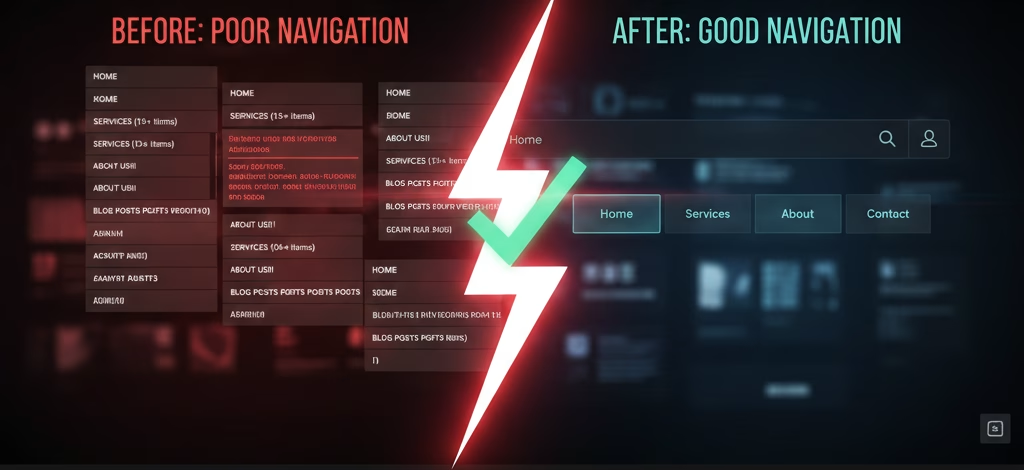
Unclear navigation leads to a poor user experience, frustration, higher bounce rates and the loss of credibility. Visitors find it challenging to navigate the website, find information quickly, and accomplish their goals effectively.
Clear navigation reduces the friction visitors experience while they are on your site. Moreover, consistency of clear navigation across multiple touchpoints and user journeys ensures a smooth transition from visitor to loyal brand advocate.
Fix: Keep it clear.
Simplify menus, use intuitive labels, and ensure users can reach key pages in just a few clicks.
8. Failing to communicate your business purpose effectively

It’s your responsibility to give a clear picture of what your company does to your visitors when they land on your storefront (or website). And guess what, when they find that picture blurry, what do they do? They’ll naturally leave your site.
When loading your site, the first thing a visitor decides is if they reached the right destination. If your site pages clearly state your offerings above the fold, they are more likely to step out and quickly find the “value” they are looking for on another site.
The core purpose of your website is to enhance the credibility of your business. If your business remains unclear to your visitors and a significant communication gap exists, this factor alone is enough to confirm to them that they are not in the right spot.
Failing to communicate your business purpose leads to the following other potential disadvantages for your business:
- Decreased productivity
- Missed goals and milestones
- Employee disengagement
- Damages relationships (it leaves stakeholders also unsatisfied about the company’s mission and direction)
Fix: State it upfront.
Make your value proposition visible above the fold so visitors instantly know who you are and what you do.
Boost Site Credibility: Avoid Common Website Design Mistakes
By now, you must have gotten an idea about how these conversion killers make you leave money on the table. Avoid these common website design mistakes and boost your site’s credibility. Doing this, you’re simply offering visitors an experience they’ll want to come back to.
Web design is a circular process where everyone needs to be in sync. Our teams, business goals, and our existing knowledge about our users need constant alignment.
And honestly, the only way to ensure your site’s success is through non-stop testing and iteration, built on solid user research and usability studies.
Partner with Straight4Ward Consulting & Marketing to Get More Under One Roof
No need to keep juggling with multiple agencies. Professionals at Straight4Ward Consulting & Marketing are here to serve as your all-in-one team of experts in web design, development, branding, and marketing.
We put everything you need under a single, reliable roof!
We begin our process with a consultation during which we collect and understand your requirements. We then research your industry, audience, and competition. The aim is to deliver a tailored website designed to speak directly to the people who need it the most.
This indicates a full-suite web development service tailored specifically to businesses that want a strategic and well-integrated online store setup, rather than a generic site. Have a look at what we build:
- Custom, unique, visually appealing web designs for businesses of all sizes
- Strategic branding solutions
- Advanced custom web development
- Powerful e-commerce website
We guarantee full accountability, complete transparency, and a focus on results you can actually measure. Your web design process remains effective and stress-free.
Are you ready to discuss your project? Give me a call or request a no-cost quote to set up a chat.