You scroll past a brand’s ad, glance at their website, and within seconds, you’ve already decided whether they’re worth your time. No one told you what to think. The design did that.
That split-second judgment happens to your business too, every single day. Customers judge you visually before they read anything. Graphic design controls that first signal.
For small businesses and e-commerce brands, understanding what business graphic design actually does changes how you invest in it. It’s not a creative luxury. It’s the visual infrastructure that either supports your marketing or quietly undermines it.
Your Customer Has Already Formed an Opinion
Research from the Missouri University of Science and Technology found that users can form a first impression of a website in less than two-tenths of a second. That’s not enough time to read anything. It’s only enough time to feel something, and design determines what that feeling is.
That initial impression shapes everything that follows. A visitor who lands on a polished, visually coherent page is primed to trust what they read next.
One who lands on something cluttered or inconsistent is already skeptical, and no amount of persuasive copy fully recovers that lost ground.
What Graphic Design Actually Does for a Business
Graphic design has one job: build trust fast enough to drive action. In a business context, that’s its job, and everything else flows from that.
- It builds trust before your copy loads. Color, typography, spacing, and layout communicate the moment someone lands on your page before they’ve read a single word.
- It signals professionalism at a glance. A cluttered layout reads as disorganized. Mismatched fonts read as careless. Clean, consistent visuals tell customers this business pays attention.
- It drives action, not just aesthetics. Graphic design exists to get the right people to trust you quickly enough to act. That’s its function in a business context, and everything else follows from it.
Communicating Ideas Before Words Do the Work
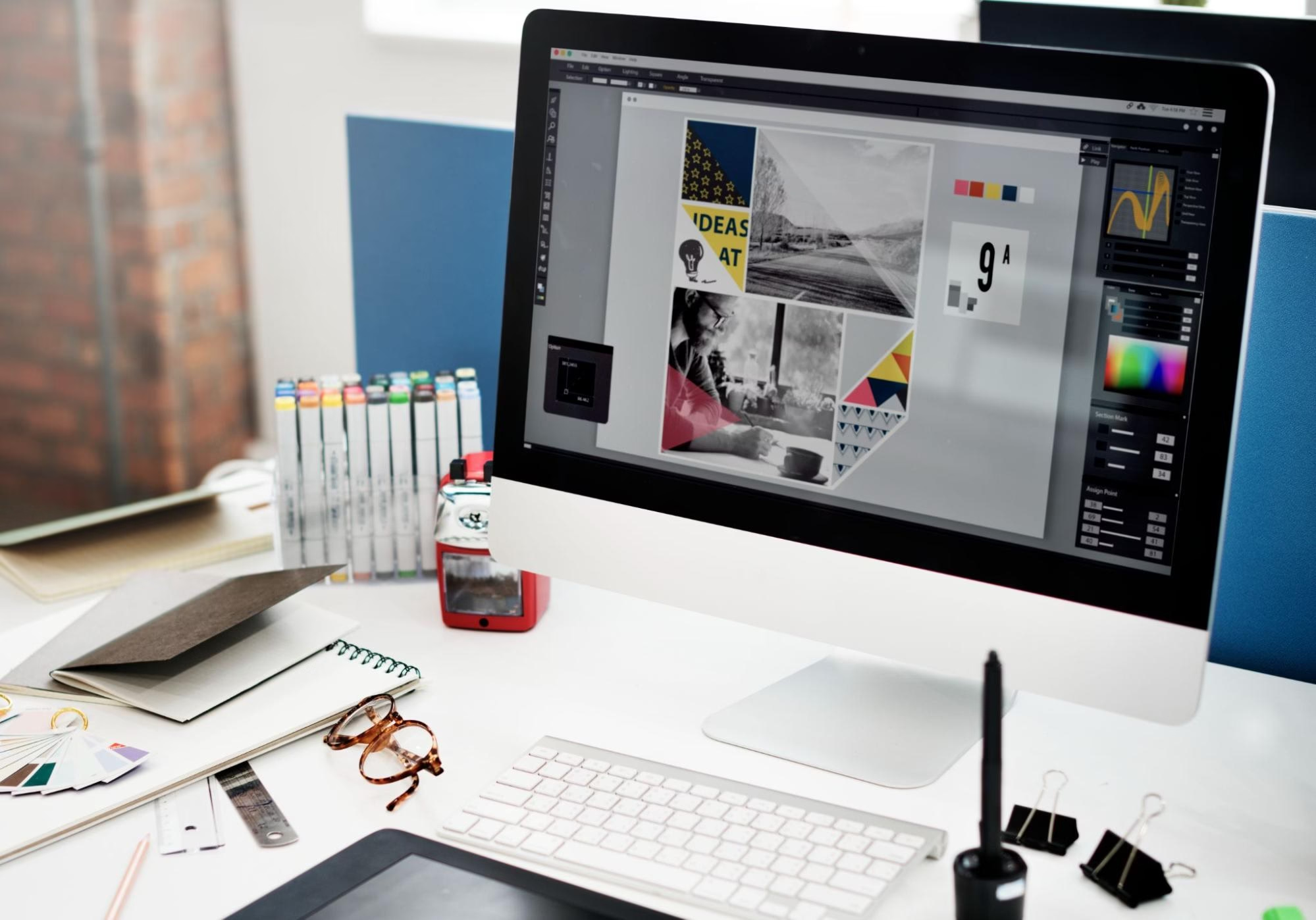
One of the clearest advantages of strong graphic design is its efficiency in transferring information. A well-structured product page, a clear content hierarchy, and a visual that shows rather than explains make it easier for customers to absorb your message and act on it.
According to HubSpot, visuals combined with text are three times more engaging than text alone. When customers can understand your offer at a glance, friction drops and decisions come faster.
Good Design Builds Credibility. Weak Design Destroys It.
Trust is the prerequisite for every transaction. Before someone enters a credit card number, signs a quote, or even fills out a contact form, they need to feel confident that the business on the other side is legitimate. Design is what creates or kills that confidence before your words get the chance.
Stanford’s Web Credibility Project found that 46.1% of consumers judge a company’s credibility based on its website design alone judged a company’s credibility based, at least in part, on website design.
For a significant portion of first-time visitors, the design assessment comes before anything else gets a fair read. That number alone should change how graphic design gets prioritized in a marketing budget.
The gap between a business that looks credible and one that doesn’t isn’t always big. Often it comes down to font consistency, color discipline, and visual clarity across a handful of touchpoints. Those are fixable, but only once you recognize them as credibility problems and not just aesthetic ones.
Consistency Is What Turns Exposure Into Revenue
Consistency turns exposure into recognition, and recognition into preference. When a customer sees the same color palette, visual style, and typography across your website, emails, social posts, and packaging, they start to remember you without effort.
Most purchase decisions happen after multiple exposures to a brand, and consistent design is what makes each one count.
Small businesses underestimate how fast visual inconsistency accumulates. A logo used in three different versions, social posts with mismatched fonts, and marketing materials that don’t match the website all send the same signal: this brand isn’t paying attention.
Each one is a small erosion of the visual trust that design is supposed to build. Customers notice these inconsistencies even when they can’t name them, and that low-grade doubt quietly works against every sales conversation.
Consistent design doesn’t happen by accident. It’s the result of intentional decisions made early and followed through across every channel.
For businesses competing against larger brands with bigger budgets, that consistency is often one of the most effective ways to build credibility.
Design Makes Every Other Marketing Investment Work Harder
One of the most underappreciated benefits of graphic design is how it multiplies the return on everything else you spend. Better-looking ads get more clicks. Cleaner email layouts get more reads. Stronger visual branding builds social media recognition faster without increasing posting frequency.
Paid advertising makes this especially clear. Two businesses can run ads in the same market with the same budget. The one with stronger creative is more likely to earn attention, build trust faster, and convert more efficiently over time. Weak design doesn’t just underperform; it makes the rest of the ad spend less efficient.
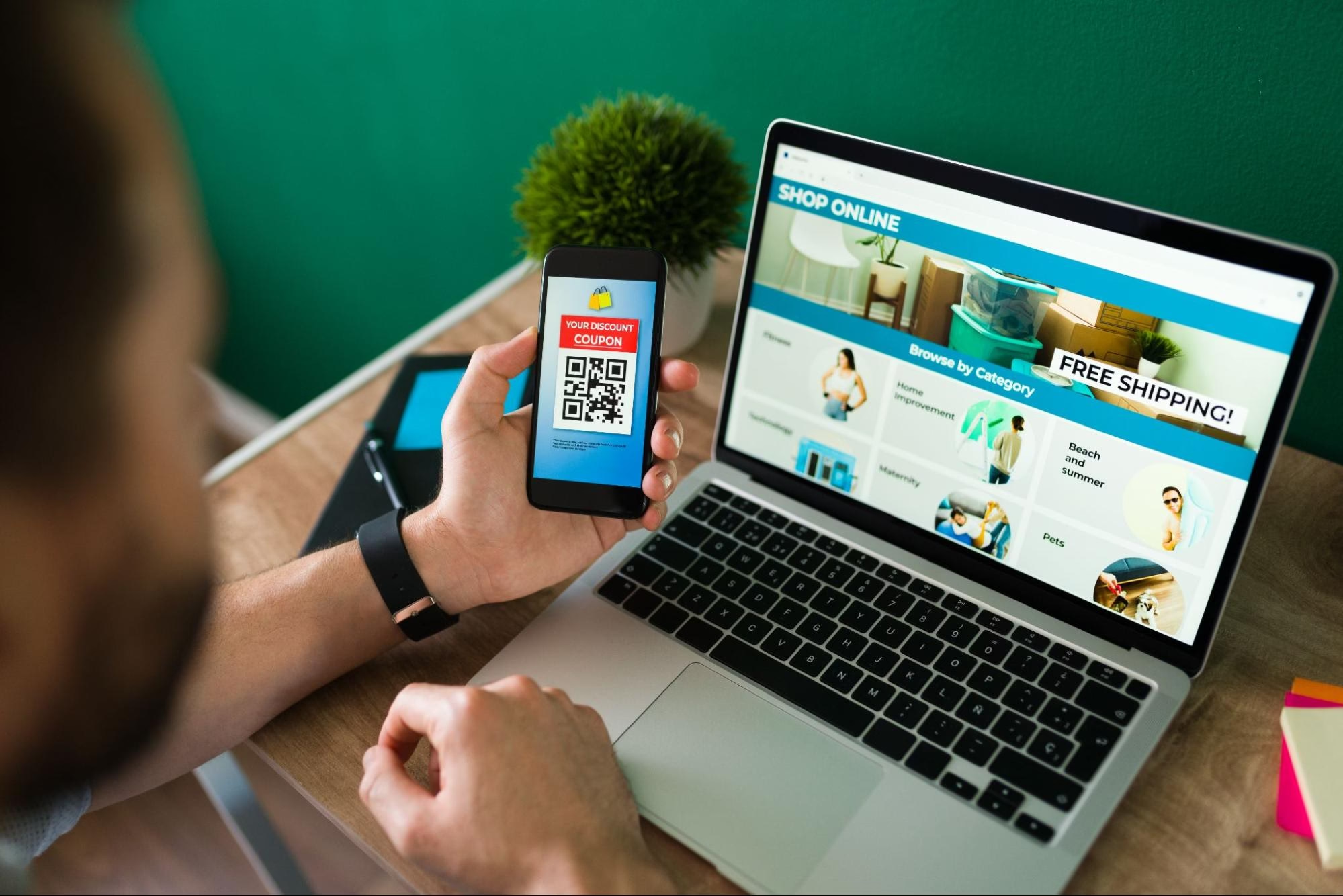
For Shopify and e-commerce brands, the connection is direct. Product photography, category page layouts, promotional banners, and email templates all feed into whether a visitor buys or leaves. Design is embedded in every step of the customer journey, and each weak link in that chain shows up in the conversion data.
What Bad Design Is Actually Costing You
- It drains your marketing budget silently. Business owners chase traffic numbers and ad spend without realizing the visual layer may be the reason people are not converting. The offer looks fine. The price seems competitive. The design is the problem no one named.
- It loses sales without a visible reason. Customers don’t consciously register weak design. They just feel uncertain, don’t buy, and move on. You never see the objection because it was never verbal.
- It compounds over time. A single bad impression is recoverable. A credibility gap that follows every marketing effort, every ad, every email, and every landing page isn’t a one-time cost. It’s a recurring one.
Your Brand Should Look Like It Means Business

If customers are landing on your site and leaving without converting, design is worth examining before spending another dollar on traffic. Not because it’s the only variable, but because it conditions whether every other variable gets a fair chance.
Straight4ward Consulting & Marketing works with small businesses and e-commerce brands to identify visual inconsistencies and prioritize what to fix first.
No agency fluff, no vague creative projects. Just honest, strategic work aligned with what your customers actually respond to.
Book a free consultation and get a clear picture of where your brand stands and what to fix first.